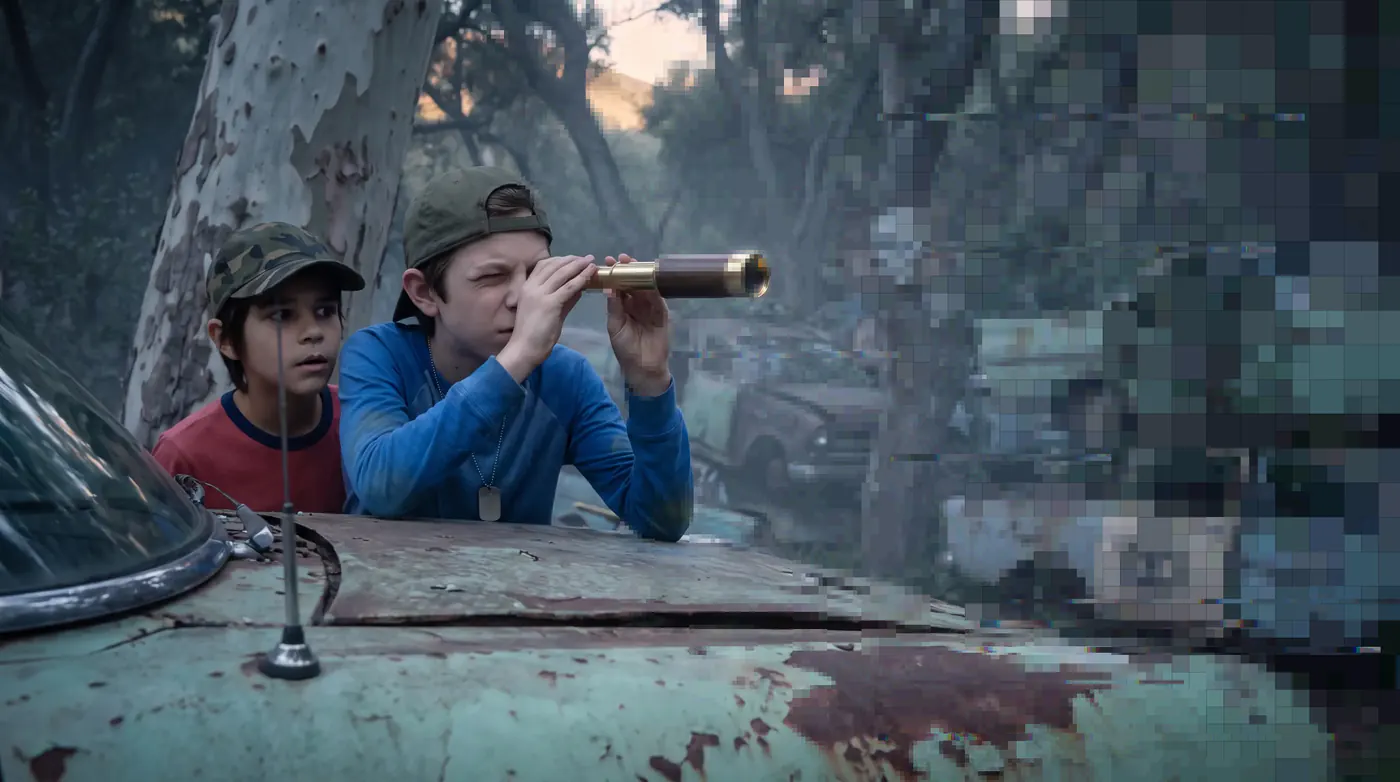
Frame
by frame
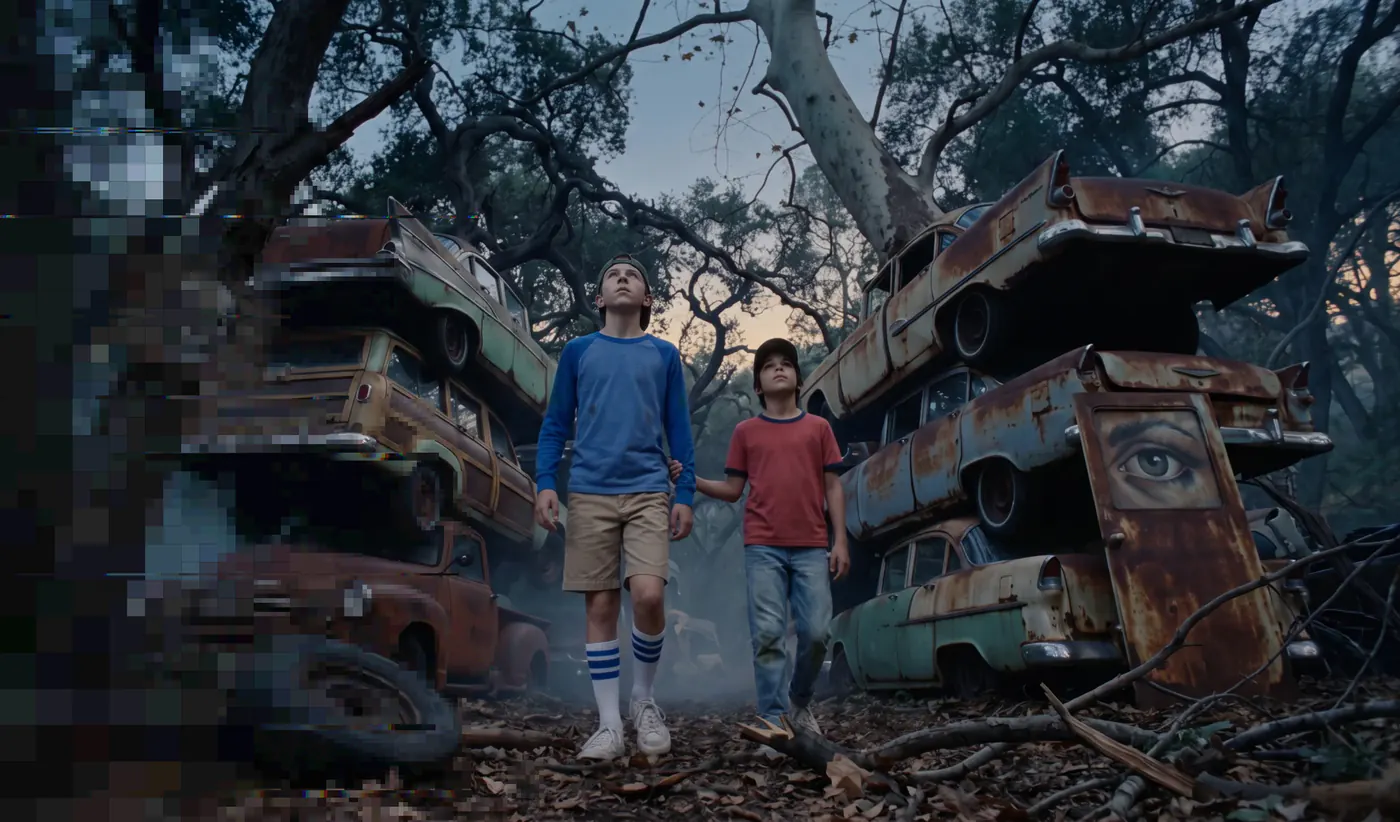

No magic
button
There is no button that makes a film.
Every shot is written, generated, chosen,
set in motion, cut and graded,
and much of what is made never reaches the screen.
This page opens the workshop.
- 01ScriptThe blueprint for every shot
- 02ReferencesFaces, wardrobe, props and places
- 03StillsImage models, take after take
- 04MotionVideo models bring the shots to life
- 05EditCut in Final Cut Pro, with music and sound
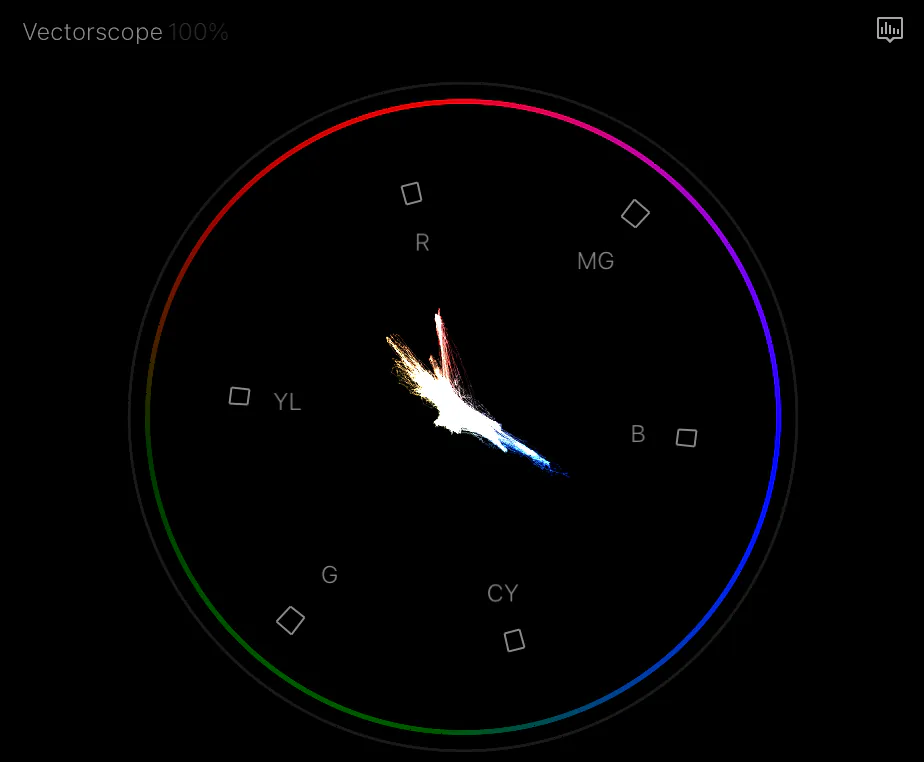
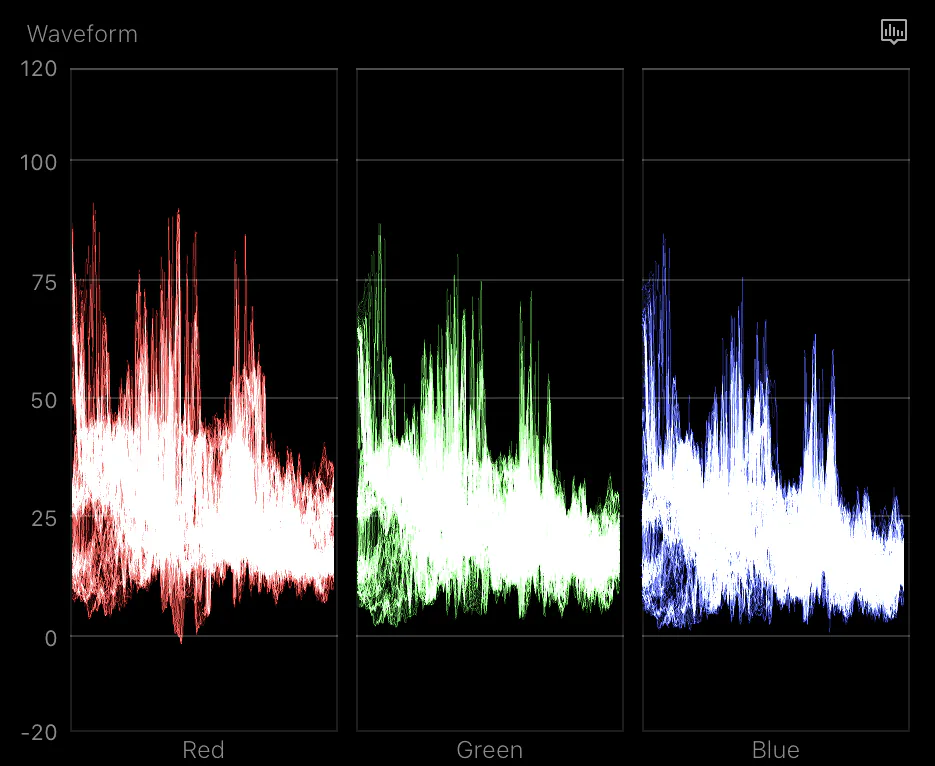
- 06GradeColor checked on the scopes
The truth is
in the detail
A model can be brand new. It can be cheap.
At first glance, its images can look ready.
But a film is watched big, frame by frame,
and that is where the truth comes out:
in the details of the finished image.
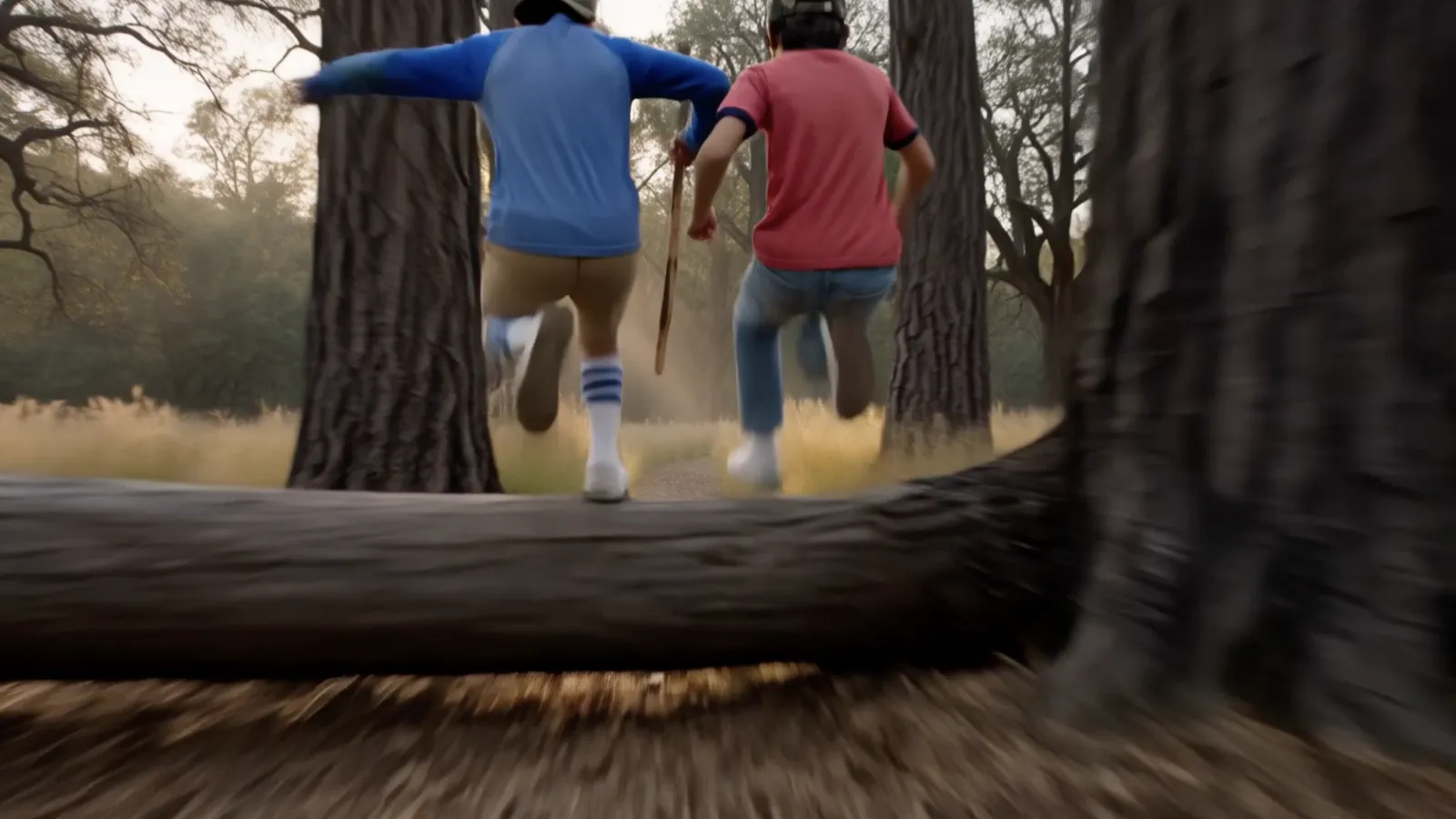
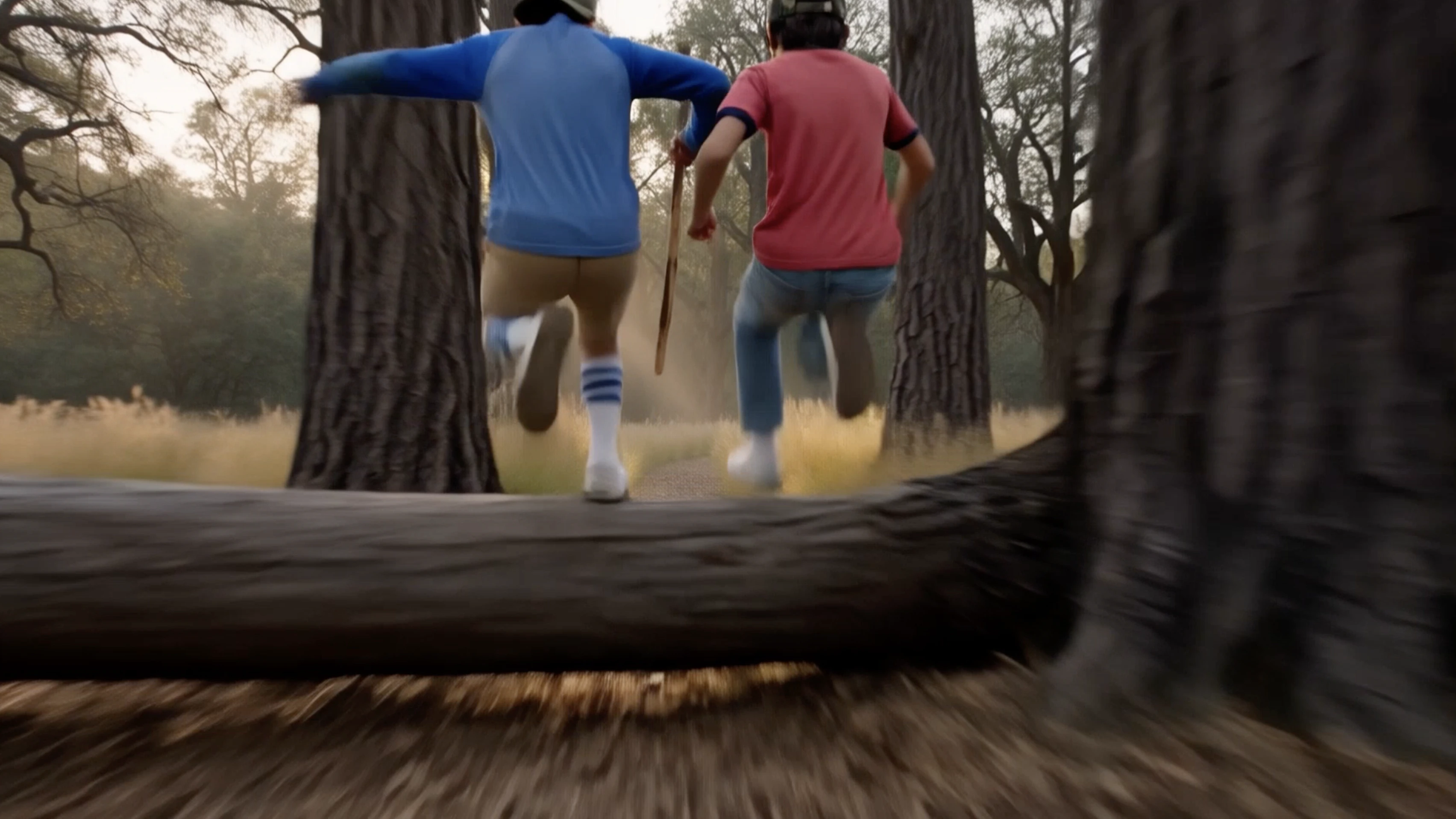
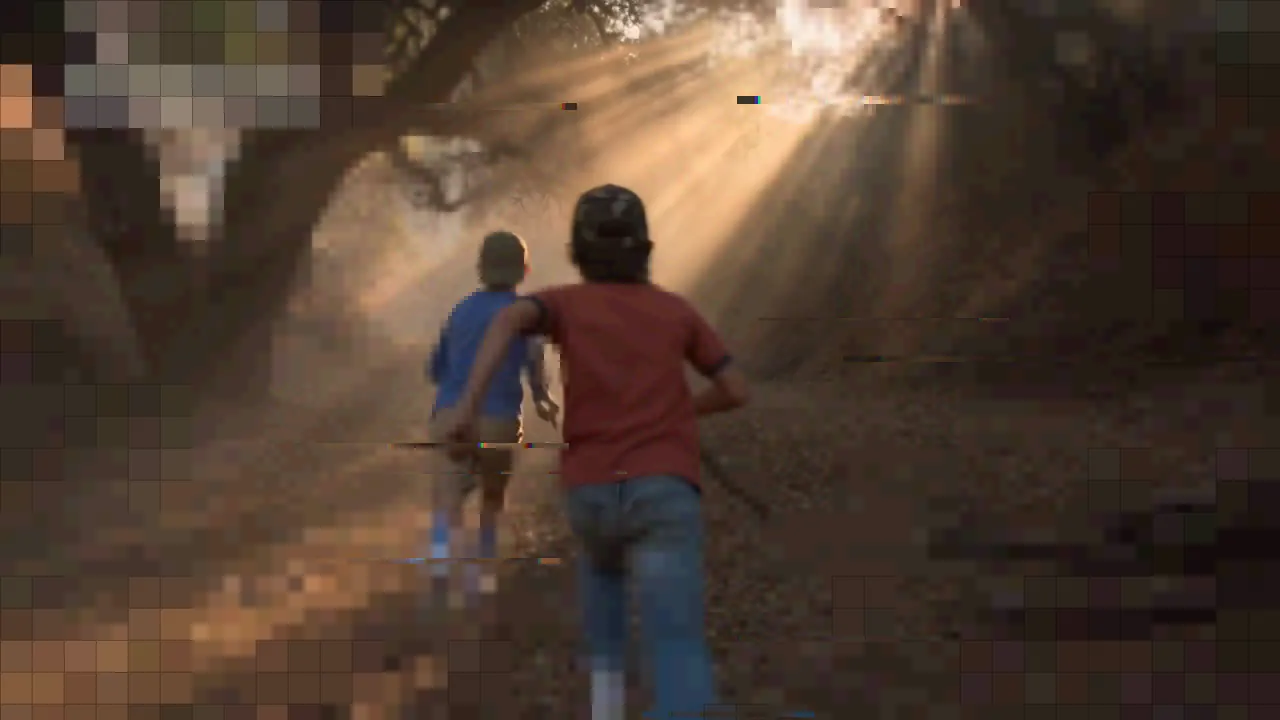
Three flaws hide in this frame: the hand, the path and the grass.
Small, this frame looks like a shot from the film.
Up close, it falls apart.
So every image is judged at full size before it is used,
however new, cheap or impressive the model behind it.
Same words,
five films
One prompt. The same two reference images.
Five video models, eight seconds each.
Switch between them while they play.
The clip keeps its place, so you always compare the same moment.
- 01Who is whereLuka on the left and a head taller, Benjamin on the right
- 02The facesDo the boys still look like their reference sheets?
- 03The sticksBoth should keep them, all the way
- 04The stumbleLuka lands badly, Benjamin pulls him on
- 05The look backBoth glance over their shoulders in the ferns
- 06One shotNo cuts, handheld all the way
Written like
a shot list
This is the prompt all five models were given,
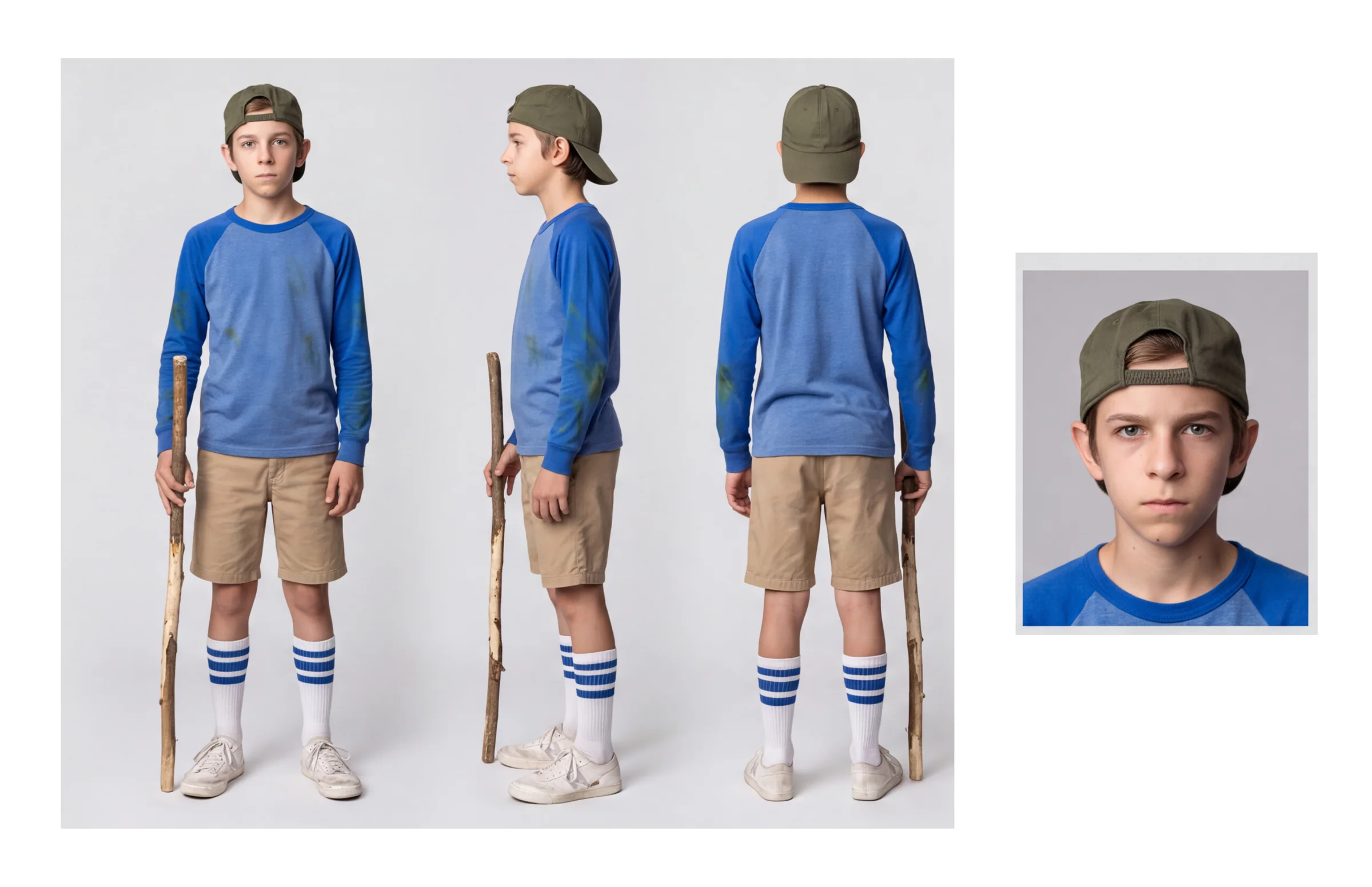
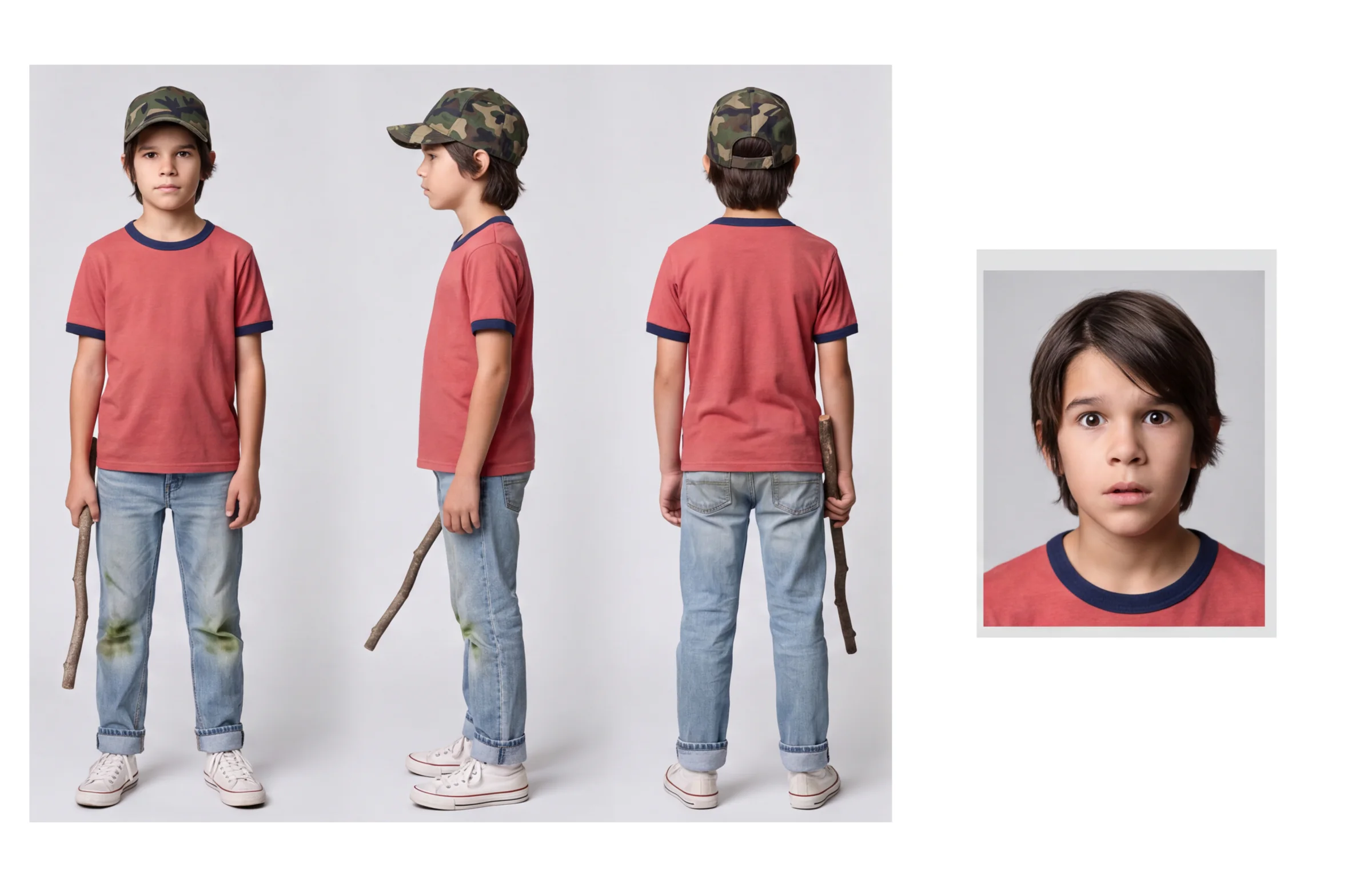
together with two character sheets.
Every @Image in the text points to one of them.
- Scene context
- Late afternoon, 1982, a Southern California canyon woodland. Two brothers flee through the forest, crashing through the undergrowth. The camera chases right behind them.
- Active references
- @Image 2 boy about 11, camo cap, red ringer T-shirt, light jeans, crooked stick. 100% matches the reference.
@Image 1 : boy about 12, a head taller than @Image 2 , olive cap backwards, blue raglan, khaki shorts, long pale stick. 100% matches the reference. - Location map
- Canyon woodland: tall pale sycamores, dark twisted oaks, waist-high dry wild oats, patches of fern, dry brown leaves, a fallen trunk across the path.
- First frame / blocking
- @Image 1 on the left, @Image 2 on the right, both 3 meters ahead of the camera, running away from it into the woods, backs to camera.
- Format mode
- One continuous shot, the camera does not cut on its own.
- Optics
- 35° field of view throughout, no drift, focus on the boys.
- Camera
- Handheld, the operator sprinting right behind them at 11 km/h, low at chest height. Hard, jolting shake with every stride, the horizon tilting as the camera weaves between trunks, grass and branches whipping across the lens, brief motion blur.
- Action
- 0.0s to 3.0s: they sprint side by side through the tall grass, sticks in hand, dodging between the sycamore trunks. 3.0s to 5.0s: both leap the fallen trunk; @Image 1 lands badly and stumbles, @Image 2 grabs his arm without stopping and pulls him on. 5.0s to 7.0s: they plunge through a wall of ferns, both throwing a quick look back over their shoulders toward the camera. 7.0s to 8.0s: they break into a sunlit gap and keep running.
- Performance
- Urgent and scared, pure flight: hard breathing through slightly parted lips, jaws set, eyes wide on the glance back.
- Lighting
- Low late-afternoon sun, 4300K, flickering through the canopy in bright shafts and dappled patches that strobe across the boys as they run. Dust glittering in the air. Haze 20%.
- Audio
- Close and chaotic: bodies crashing through dry grass and ferns, twigs snapping, sneakers pounding leaves, ragged breathing. No music.
- Style
- Photoreal early 1980s 35mm film print: fine organic grain, warm amber and olive tones, soft halation in the sun shafts.
- Positive locks
- One continuous handheld chase shot. @Image 1 left, @Image 2 right and a head taller. Both keep their sticks.